
Overview
The Chinese University of Hong Kong (CUHK) is a public research university located in the New Territories of Hong Kong. CUHK is assessed as low risk, but it engages with the Chinese space industry and cooperates in military research with Nanhu Laboratory. It also collaborates with the Chinese Academy of Sciences through the Shenzhen Institutes of Advanced Technology and engages in joint research in remote sensing, photonics, robotics and AI.
The university, the second oldest in Hong Kong, was established in 1963 through the merger of three existing colleges – Chung Chi College, New Asia College, and United College. Its eight faculties comprise the Faculties of Arts, Business Administration, Education, Engineering, Law, Medicine, Science, and Social Science, along with a graduate school which administers all the postgraduate programs.
In 2026, the university has 4 National Key Laboratories, 7 InnoHK Research Centres established under the InnoHK Innovation Hong Kong Research and Development Platform, 1 National Remote Sensing Centre Hong Kong Research Development and Training Base, 3 Ministry of Education Key Laboratories and 7 Chinese Academy of Sciences and Hong Kong Joint Laboratories.
CUHK has collaborative links with various CAS entities including the Hefei Institutes of Physical Science and Institute of High Energy Physics, while the Shenzhen Institutes of Advanced Technology (SIAT) was jointly established by CAS, the Shenzhen Municipal Government, and The Chinese University of Hong Kong. SIAT oversees a range of high-technology laboratories. CUHK-Shenzhen is a branch campus under which are a wide range of laboratories, including provincial key laboratories, engaged in research on diverse dual-use technologies such as computer vision, AI, quantum, pattern analysis, network theory, robotics ad advanced materials.
In 2026, the university launched "CUHK-1", claimed to be 'the world's first large-scale artificial intelligence model satellite for urban sustainable development.' The university has also launched the ‘Hong Kong Youth Innovation Satellite’ and the CUHK-Shenzhen No. 1 satellite. In its space projects, CUHK engages with many Mainland entities, including the China National Space Administration, the China Academy of Space Technology, China Aerospace Science and Technology Corporation, UESTC, NUDT, Hainan Satellite Data and Application Research Centre and the aerospace companies Chengdu Guoxing Aerospace Co., Ltd. (ADA Space) and Geespace.
CUHK also hosts the State Key Laboratory of Quantum Information Technologies and Materials (CUHK) which engages in research on space-based quantum communication, space-based remote sensing, and navigation. A Satellite Remote Sensing Station has been established at CUHK and the University’s Institute of Space and Earth Information Science in conjunction with the Chinese Academy of Sciences, operates the Hong Kong Base of the National Remote Sensing Center of China Centre.
CUHK is involved in joint research in defence areas such as remote sensing, photonics, robotics and AI with entitles including Nanhu Laboratory and NUDT.
Sanctions Lists
CUHK itself does not appear on any major sanctions lists as of March 2026.
A CUHK satellite launched in October 2024 involved cooperation with the University of Electronic Science and Technology of China (UESTC) and the China Aerospace Science and Technology Corporation, both of which are named on US and Japanese sanctions lists.
In October 2025, the U.S. Department of the Treasury’s Office of Foreign Assets Control (OFAC) sanctioned Shandong Jincheng Petrochemical Group Co., Ltd, for dealing in Iranian oil. Jincheng Petrochemical has a joint laboratory with CUHK (Shenzhen) -- the CUHK (SZ) - Jincheng Advanced Synthetic Materials Joint Laboratory 香港中文大学(深圳)-金诚石化先进合成材料联合实验室.
Collaborations with Russia
CUHK maintains partnerships with Russia’s National Research University Higher School of Economics and the New Economic School.
Collaborations with Iran
No formal collaborations with Iran have been identified as of July 2026.
Critical Technologies Research Rankings
CUHK ranks in the top 20 institutions in the world for high-impact research in 7 critical technologies, including advanced underwater communications and advanced robotics, according to data from ASPI’s Critical Technology Tracker.
CUHK’s global and national rankings for these technologies are as follows:
Critical technology | CUHK Global ranking | CUHK national ranking |
Advanced underwater communication | 19 | 17 |
Extended reality | 6 | 4 |
Mesh networks | 19 | 15 |
Integrated circuit design and fabrication | 11 | 8 |
Computer vison | 14 | 14 |
Advanced robotics | 9 | 8 |
Magnetic sensors | 19 | 12 |
Defence and Security Links
China Aerospace Science and Technology Corporation
In July 2009, the China Centre for Resources Satellite Data and Application (CRESDA) 中国资源卫星应用中心, a subsidiary of the China Aerospace Science and Technology Corporation (CASC) 中国航天科技集团公司, and four universities: Wuhan University, the Chinese University of Hong Kong, Beijing Normal University, and Nanjing University signed an agreement to jointly establish remote sensing technology research and application centres 雷达遥感应用研究中心.
Academy of Military Medical Sciences PLA
The School of Chinese Medicine at CUHK collaborates with the Institute of Radiation Medicine, Academy of Military Medical Sciences PLA 中国人民解放军军事医学科学院放射与辐射医学研究所.
Links with Chinese Government Institutions
China Academy of Sciences (CAS)
In 2006, the Shenzhen Institutes of Advanced Technology (SIAT) under the Chinese Academy of Sciences, was jointly established by CAS, the Shenzhen Municipal Government, and CUHK. This is a key CAS presence in the Guangdong–Hong Kong–Macau Greater Bay Area, and comprises ten research institutes spanning AI, biomedical engineering, biomedicine, brain sciences, synthetic biology, and materials sciences. SIAT includes the Guangdong–Hong Kong–Macau Joint Laboratory of Human–Machine Intelligence-Synergy Systems.
In 2015, CUHK Shenzhen and the CAS Institute of High Energy Physics signed a memorandum for strategic cooperation ' to carry out comprehensive cooperation in scientific research and personnel training.'
In 2025, the CAS Hefei Institutes of Physical Science (HFIPS), Macau University of Science and Technology (MUST), and CUHK signed an agreement to jointly establish the Joint Laboratory for Spectroscopic Detection of Matter Composition in Deep Space (Lab-DeepSpec) in Hefei, Anhui Province.
China National Space Administration
In November 2023, CUHK’s Institute of Space and Earth Information Science (ISEIS) signed an MoU with the China National Space Administration’s Earth Observation System and Data Center 'to strengthen cooperation between Hong Kong and Mainland China in the field of earth observation and promote the development of aerospace technology. ' The two parties collaborated on the “CUHK -1 Satellite” project and constellation construction, satellite data sharing and exchange, international cooperation and other related areas. In December 2024, the International Satellite Data and Application Cooperation Council Unit was launched at CUHK.
Nanhu Laboratory
In 2023, CUHK-Shenzhen and Nanhu Laboratory 南湖实验室 in Jiaxing jointly developed ‘A UAV electromagnetic patrol method and system’, which relates to jamming communications, countermeasures and military uses of UAVs, for which they were awarded a patent. Nanhu Laboratory is a scientific research platform jointly established by the Jiaxing Municipal People's Government in Zhejiang and the Beijing Big Data Advanced Technology Research Institute 北京大数据先进技术研究院.
China Academy of Space Technology (CAST)
The China Academy of Space Technology—CUHK Joint Research Laboratory of Space Microwave Technology and Smart Manufacturing operates as an alliance between the Xi'an Branch of the China Academy of Space Technology (CAST) and the CUHK Faculty of Engineering.
Links with Chinese Universities
University of Electronic Science and Technology of China (UESTC)
On 24 September 2024, the "Hong Kong Youth Innovation Satellite," the first low-Earth orbit satellite designed and developed by the Chinese University of Hong Kong, was launched from the Haiyang Oriental Spaceport. This was the first satellite fully funded and constructed by the Hong Kong government.
This satellite project received "guidance" from the China National Space Administration and the Ministry of Science and Technology, with the University of Electronic Science and Technology of China (UESTC), and the aerospace company, Chengdu Guoxing Aerospace Co., Ltd. (ADA Space) 「成都國星宇航有限公司」being the main developers.1
ADA Space has close collaborations with enterprises and universities sanctioned by the United States, including the China Aerospace Science and Technology Corporation.
In February 2026, CUHK Satellite‑1, an Earth‑observation satellite, was launched. Together with the Hong Kong Youth Scientific Innovation satellite, these satellites form Hong Kong’s first Low Earth Orbit (LEO) satellite constellation.
National University of Defense Technology (NDUT)
CUHK and NUDT jointly established the CUHK-NUDT Joint Centre for Intelligent Sensing and Systems. The Centre was established in 2002. Professor Yunhui LIU 刘云辉, of the Faculty of Engineering in CUHK, heads the joint centre as well as the Centre for Robotics and Technology Education in CUHK. He is also a Changjiang Professor at NUDT.
Zhejiang University
CUHK and Zhejiang Lab signed a strategic collaborative framework agreement in 2021 to develop exchange activities in intelligent sciences and technologies. Zhejiang Lab is a research institute established jointly by the Zhejiang Provincial Government, Zhejiang University and Alibaba Group in 2017. It focuses on intelligent perception, artificial intelligence, intelligent computing, intelligent networks, and intelligent systems.
The Joint Centre for Advanced Photonics Research of The Chinese University of Hong Kong and Zhejiang University is a collaborative academic and scientific partnership aimed advancing innovation in the field of optics and optoelectronics.
Peking University
CUHK has linked with Peking University in the MoE Key Laboratory of High Confidence Software Technologies (Sub-Laboratory, The Chinese University of Hong Kong). The laboratory focuses on research and teaching in the field of advanced Internet software technology.
Great Bay University
In December 2022, CUHK and Great Bay University jointly established the Great Bay University – The Chinese University of Hong Kong Joint Institute of Advanced Materials and Green Energy Research (JIAMGER).
Links with Chinese Companies
Geespace 浙江时空道宇科技有限公司
In February 2024, a satellite named CUHK-Shenzhen No. 1 was launched from the Xichang Satellite Launch Centre. Developed and operated by CUHK-Shenzhen and Geespace (under Zhejiang Geely Holding Group), the satellite is equipped with communication, navigation, and remote sensing capabilities.
Campuses in Mainland China
CUHK-Shenzhen
The Chinese University of Hong Kong, Shenzhen (CUHK-Shenzhen) was formally established in 2014. The campus was approved by the Ministry of Education under the Sino-Foreign Collaborative Education framework and essentially CUHK-Shenzhen uses the ‘brand’ of CUHK. The two institutions signed a new Strategic Collaboration Framework Agreement in 2021.
Party Secretary:LI Xuejin 李学金
CUHK-Shenzhen is located at: 2001, Longxiang Avenue, Longgang District, Shenzhen, Guangdong Province.
Noteworthy International Collaborations
CUHK participates in a range of international academic networks.
CUHK collaborates with Switzerland’s ETH Zurich which is one of the world’s top engineering institutions and a pioneer in nanotechnology. Collaboration areas includes smart & sustainable cities/architecture.
CUHK and the University of Manchester offer a joint research fund comprising a seed-corn fund and a strategic research fund to foster research collaborations in areas including advanced materials, digital platforms, energy and climate change, future cities, marine science, and tissue engineering. The University of Manchester is also engaged in CUHK’s Centre for Perceptual and Interactive Intelligence established under the InnoHK initiative.
CUHK Collaborates with the University of Exeter and University of Amsterdam in TeV Solar Gamma Ray Research.
The many other joint research projects which CUHK engages in with other universities are listed here.
Research Centres and Dual Use Technologies
State Key Laboratory of Quantum Information Technologies and Materials (CUHK)
The State Key Laboratory of Quantum Information Technologies and Materials was established in 2025 based at the Hong Kong Institute of Quantum Information Science and Technology, CUHK. The Laboratory focuses on the development of diamond quantum sensing technology and its applications in condensed matter physics, biology, energy materials, and device development; precision metrology using novel quantum interferometers, with applications in large-baseline interferometric telescopes and space-based quantum communication, space-based remote sensing, and navigation.
CUHK Institute of Space and Earth Information Science
The CUHK Institute of Space and Earth Information Science (ISEIS) 香港中文大学 太空与地球信息科学研究所 was established in 2005 in conjunction with the Chinese Academy of Sciences, following their earlier cooperation in the Joint Laboratory for GeoInformation Science, together with the State Key Laboratory for Information Engineering in Surveying, Mapping and Remote Sensing, Wuhan University. PRC MOST Minister Guanhua XU attended the launch. ISEIS is also the Hong Kong Base of the National Remote Sensing Center of China Centre 國家遙感中心 香港研究開發與培訓基地 under MOST, with its function being ‘enhancing the technological collaboration between Hong Kong and mainland China in the aspects of spaceborne and airborne satellite remote sensing.’
During its first phase (2005-2010), ISEIS was sponsored by MOST and the Innovation Technologies Commission of the Hong Kong SAR government (ITC) to build the Hong Kong Satellite Remote Sensing Station, a part of the national earth observation infrastructure. The station was built under the 863 High Technology Research and Development Program of MOST. Funding was provided by the HK Fok Ying Tung Foundation.
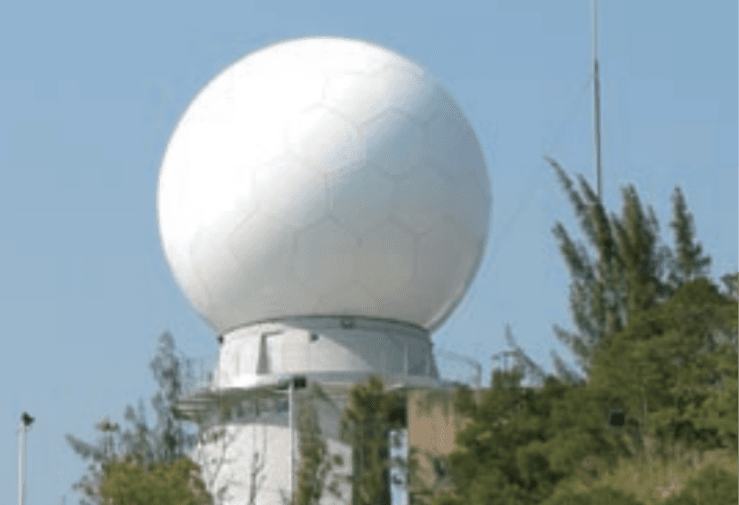 CUHK Hong Kong Satellite Remote Sensing Station Source: https://web.archive.org/web/20260506020826/https://www.iseis.cuhk.edu.hk/assets/images/download/iseis.pdf
In November 2023, the institute signed an MoU with the China National Space Administration's Earth Observation and Data Center ‘to strengthen mutually beneficial cooperation between Hong Kong and the Mainland in the field of Earth observation and promote the development of aerospace technology’ and to plan the first CUHK-1 Science Satellite and its constellation.
In August 2024, the Aerospace Science and Earth Informatics Programme (ASEIX) at CUHK received a delegation from the Beijing Institute of Aerospace Test Technology (101 Institute, a subsidiary of the 6th Academy of the China Aerospace Science and Technology Corporation (CASC) to discuss collaboration.
In May 2025, the Institute, led by Professor Mei-Po Kwan 關美寶, secured RMB 6 million funding for the establishment of the "Geospatial Intelligence Laboratory" 地理空間智慧實驗室 Platform Project through joint support of the Department of Science and Technology of Guangdong Province, CUHK-Shenzhen, and The Chinese University of Hong Kong and a further HK$ 26.7 million from the Hong Kong Innovation and Technology Fund.
In September 2025, the institute signed an MoU with the Hainan Satellite Data and Application Research Center 海南衞星數據與應用研究中心, to ‘jointly establish an international cooperation model of “R&D in Hainan + Promotion in Hong Kong”’, aiming to build an international satellite data hub.
In September 2025, the Institute was awarded HK$18.99 million through the “Innovation and Technology Support Programme Special Call on Aerospace Technology” to support its pioneering carbon satellite research project.
MoE Key Laboratory of High Confidence Software Technologies (Sub-Laboratory, The Chinese University of Hong Kong)
In 2010, CUHK received approval from the PRC Ministry of Education to establish the MoE Key Laboratory of High Confidence Software Technologies (Sub-Laboratory, The Chinese University of Hong Kong) within its Faculty of Engineering, in conjunction with Peking University as part of the National High Technology Research and Development Program (863 Program). The laboratory focuses on research and teaching in the field of advanced Internet software technology.
CUHK MoE-Microsoft Key Laboratory of Human-Centric Computing and Interface Technologies
The CUHK MoE - Microsoft Key Laboratory of Human-Centric Computing and Interface Technologies (Key Laboratory) was launched in 2009. The CUHK-Microsoft Joint Laboratory was founded in 2005 and in recognition of its scientific and research achievements, the Joint Laboratory was assigned national status by the PRC MoE in 2008. As of 2009, the key laboratory came under the management of the Ministry of Education.
The Shenzhen Institutes of Advanced Technology (SIAT) of the Chinese Academy of Science (CAS)
SIAT was jointly established by CAS, the Shenzhen Municipal Government and The Chinese University of Hong Kong in February 2006. The institutes which SIAT operates include:
- Shenzhen Institute of Advanced Integration Technology (SIAIT) 先进集成技术研究所.
- Institute of Advanced Computing and Digital Engineering (IACDE) 先进计算与数字工程研究所.
- Institute of Biomedicine and Biotechnology (IBB) 先进计算与数字工程研究所.
- Institute of Advanced Materials Science and Engineering (AMSE) 材料人工智能研究所
- Institute of Scientific Instrumentation (INSCI) 科学仪器所.
CUHK Interdisciplinary Artificial Intelligence Research Institute
CUHK and the Shanghai Artificial Intelligence Laboratory jointly established the CUHK Interdisciplinary Artificial Intelligence Research Institute (IAIRI) in 2021 to promote development and innovation in artificial intelligence and related interdisciplinary areas.
The CUHK InnoHK Hong Kong Centre for Logistics Robotics (HKCLR) 香港中文大学InnoHK香港物流机械人研究中心 was established in 2020 by CUHK and is supported by the InnoHK initiative of the HKSAR Government. The Centre focuses on the research and development of robotics and artificial intelligence technologies. Its director Professor Yunhui LIU 刘云辉 is a Changjiang scholar at NUDT. In May 2026, CUHK announced the establishment of the Hong Kong Embodied AI Lab香港具身智能实验室 under the HKCLR.
A very wide range of research institutes have been established under CUHK (Shenzhen). These include:
National-local Joint Engineering Laboratory of Robotics and Intelligent Manufacturing机器人与智能制造国家地方联合工程实验室, headed by XU Yangsheng 徐扬生, an academician of the Chinese Academy of Engineering and the head of CUHK (Shenzhen). The laboratory focuses on key robotic technologies and maintains close collaboration with two national-level laboratories: the National Engineering Research Center for Visual Technology 视频与视觉技术国家工程研究中心at Peking University and National NC System Engineering Research Center国家数控系统工程技术研究中心at Huazhong University of Science The Chinese University of Hong Kong Shenzhen and Technology.
The CUHK Shenzhen Innovation and Technology Research Institute (Futian) 香港中文大学深港创新研究院(福田)was jointly established in 2020 by the Futian District People's Government (Shenzhen) and CUHK. It focuses on robotics, artificial intelligence, and medicine.5
The Guangdong Provincial Key Laboratory of Mathematical Foundations for Artificial Intelligence 广东省人工智能数理基础重点实验室, founded in 2023, focuses on the development of the mathematical foundations of AI. It was established through cooperation between the School of Data Science and the School of Science and Engineering of CUHK-Shenzhen.
CUHK (Shenzhen)-IQA Joint Quantum Lab香港中文大学(深圳)- 深圳国际量子研究院量子联合实验室. This is a joint laboratory between CUHK (Shenzhen) and the International Quantum Academy of Shenzhen and engages in research and teaching in the fields of quantum information mathematics foundation, quantum state control, quantum algorithms, and quantum software.
The CUHKSZ- Linklogis Joint Laboratory of Computer Vision and Artificial Intelligence香港中文大学(深圳)- 联易融计算机视觉与人工智能联合实验室 is a cooperative project between Linklogis Digital Technology Group Co., Ltd. and CUHK (Shenzhen) and aims to attract and cultivate high-level talents in computer vision, artificial intelligence, data science, statistics.
Shenzhen Key Laboratory of Pattern Analysis and Perceptual Computing 深圳市模式分析与感知计算重点实验室 comes directly under CUHK-Shenzhen and engages in research in pattern analysis and perceptual computing, and promoting the development of related industry in Shenzhen.
The Guangdong Provincial Key Laboratory of Future Networks of Intelligence广东省未来智联网络重点实验室 is based on the Future Network Institute of Intelligence (FNii), CUHK-Shenzhen and concentrates on AI-enabled intelligent network theory, intelligent Internet of Things, and semantic communication theory.
The Shenzhen Institute of Artificial Intelligence and Robotics for Society 深圳市人工智能与机器人研究院 is an institute for fundamental and applied research in artificial intelligence and robotics. CUHK-Shenzhen is the major institution backing this institute
Professor David ZHANG (张大鹏) is Director of the Centre for Computer Vision in the Shenzhen Institute of Artificial Intelligence and Robotics for Society and Director of CUHK(SZ)-Linklogis Joint Laboratory of CV & AI. He also serves as Visiting Chair Professor in Tsinghua University and Harbin Institute of Technology, and is Adjunct Professor in the National University of Defense Technology.
Guangdong-Hong Kong-Macao Joint Laboratory for Millimeter Waves and Terahertz 粤港澳毫米波与太赫兹联合实验室 focuses on the field of high-frequency integrated circuits and systems. It conducts innovative academic research on fundamental theories and key technologies. There is also a Longgang District Millimetre Waves and Terahertz Integrated Circuit Key Laboratory 龙岗区毫米波与太赫兹集成电路重点实验室 which is a collaboration between CUHK (Shenzhen) and Longgang District. This laboratory engages in research in the field of millimetre wave and terahertz integrated circuits, and their application in 5G and 6G communications.
Guangdong Provincial Radio Science Data Centre 广东省电磁频谱科学数据中心 is a province-level scientific innovation platform, jointly established by CUHK ( Shenzhen) and the Shenzhen Radio Monitoring Station深圳市无线电监测管理站. It focuses on the advancement of radio science data infrastructure for the Greater Bay Area, including the development of 6G technologies.
Laboratory of Geospatial Intelligence 地理空间智能实验室is a laboratory dedicated to developing the next-generation geospatial intelligence system, GBA-2, aiming to build the first full-domain digital twin platform for the Guangdong-Hong Kong-Macao Greater Bay Area.
The Guangdong Provincial Engineering Technology Research Centre of Generalized Human body Information Perception and Pattern Analysis 广东省体表泛化感知与模式分析工程技术研究中心 researches generalized perception and pattern analysis of body surfaces, a key sub-topic of artificial intelligence applied in big health, security, and intelligent manufacturing.
The Guangdong Provincial Key Laboratory of Optoelectronic Materials and Chips 广东省普通高校光电材料与芯片重点实验室 was established with the Guangdong Provincial Department of Education in September 2022 and is based on the Shenzhen Key Lab of Semiconductor Lasers and the Longgang Key Laboratory of Next Generation Solar Devices.
The Guangdong Provincial Key Laboratory of Big Data Computing ⼴东省⼤数据计算基础理论与⽅法重点实验 was established in 2021 and is located in CUHK (Shenzhen). The laboratory was established in 2021 and led by Prof. Tom LUO罗智泉, Vice President (Academic) of the CUH (Shenzhen) and concurrently the Director of CUHK(SZ)-Tencent AI Lab Joint Laboratory on Machine Intelligence 香港中文大学(深圳)-腾讯 AI LAB 机器智能联合实验室.
The CUHKSZ-Shenzhen Research Institute of Big Data-Huawei Innovation Laboratory for Future Network System Optimization香港中文大学(深圳)-深圳市大数据研究院-华为未来网络系统优化创新实验室 applies mathematics and artificial intelligence technologies to promote future network system-level innovations and is headed by Prof. Tom LUO罗智泉concurrently the Director of CUHK(SZ)-Tencent AI Lab Joint Laboratory on Machine Intelligence 香港中文大学(深圳)-腾讯 AI LAB 机器智能联合实验室.
The Shenzhen Key Laboratory of Cross-modal Cognitive Computing (C3 Lab) 深圳市跨模态认知计算重点实验室 was established with the approval of the Science, Technology and Innovation Bureau of Shenzhen Municipality in January 2024. The laboratory focuses on research of generative large models, general cognition and explainable intelligence. It aims to emulate human cognitive process by integrating multi-modal information such as vision, hearing, and touch.
The Shenzhen Research Institute of Big Data (SRIBD) 深圳市大数据研究院 was established in 2016 through funding from the Shenzhen Peacock project. The institute focuses on the core issues in big data research including big data foundation theory, future new computing system for big data, big data driven intelligent application technology.
In December 2023 SRIBD and China Mobile Hong Kong中国移动香港公司 signed a strategic cooperation agreement. In June 2024, SRIBD and iFlytek Co., Ltd. 科大讯飞 signed an MoU in Beijing.
Shenzhen Engineering Laboratory of Robot and Intelligent Manufacturing 深圳市机器人与智能制造工程实验室was established in 2014 by CUHK (Shenzhen) together with the Shenzhen Institutes of Advanced Technology深圳先进技术研究院 under the CAS and Shenzhen Huashu Robotics Co., Ltd 深圳华数机器人有限公司 under Huazhong CNC in Wuhan 武汉华中数控股份有限公司. The laboratory is dedicated to research on space robots, security robots, industry robots and automation equipment.
The Shenzhen Key Laboratory of Big Data and Artificial Intelligence 深圳市大数据和人工智能重点实验室 studies the representation, storage, computation, and transmission of big data and develops artificial intelligence technologies to explore the potential value of big data. The laboratory claims to cooperate with the National Supercomputing Center in Shenzhen 国家超级计算深圳中心.
The Shenzhen Key Laboratory of IoT Intelligent System and Wireless Network Technology深圳市物联网智能系统与无线网络技术重点实验室 researches wireless communication, network communication, network coding, channel measurement and modelling and their application in smart cities, intelligent transportation, and intelligent logistics.
The Shenzhen Key Laboratory of Semiconductor Laser 深圳半导体激光重点实验室 (also known as Nano Opto-Electronics Laboratory (NOEL), 纳米光电子实验室) is the only research laboratory specialized in semiconductor lasers in Southern China. The laboratory conducts research in semiconductor optoelectronic material design and semiconductor laser fabrication and testing. It is headed by ZHANG Zhaoyu张昭宇, formerly attached to the Lawrence Berkeley National Laboratory in the United States.
The Longgang District Key Laboratory of Intelligent Digital Economy Security 深圳市龙岗区智能数字经济安全重点实验室 is developing core theories and algorithms to ensure digital economy security and promoting the construction of an intelligent digital economy security platform.
The Longgang Key Laboratory of Applied Spintronics 龙岗区应用自旋电子重点实验室 concentrates its research on the development of the new magnetic memories, logic computing devices and spin torque nano oscillators.
The Longgang Key Laboratory of Organic Optoelectronic Materials and Devices龙岗区有机光电材料与器件重点实验室 is involved in design and simulation of the molecular structure of single-component white luminescent materials (benzene, two-dimensional perovskite, etc.).
The Institute of Robotics and Intelligent Manufacturing, the Chinese University of Hong Kong, Shenzhen 香港中文大学(深圳)机器人与智能制造研究院 was established in 2016 with Shenzhen Engineering Laboratory for Robotics and Intelligent Manufacturing深圳市机器人与智能制造工程实验室, and with the support of the Longgang District Government of Shenzhen.
The Hopcroft Institute for Advanced Information Sciences, the Chinese University of Hong Kong, Shenzhen香港中文大学(深圳)霍普克罗夫特先进计算研究院(图灵奖科学家实验室)engages in research on super distributed systems, security and privacy protection for distributed data, data intensive computing, content and scenario perceptional computing, and deep learning-based intelligent computing.
The CUHKSZ-State Radio Monitoring Centre and Testing Centre (SRTC) Spectrum Big Data Joint Laboratory 香港中文大学(深圳)-国家无线电监测中心检测中心频谱大数据联合实验室 is co-directed by a specialist from CUHKSZ and one from the State Radio Testing Centre and engages in research on spectrum big data and intelligent spectrum management.
The CUHK(SZ)-Jincheng Advanced Synthetic Materials Joint Laboratory 香港中文大学(深圳)-金诚石化先进合成材料联合实验室 is a joint laboratory between CUHKSZ and Jincheng Petrochemical and researches advanced synthetic materials and their applications
The CUHK(SZ)-JD Joint AI Lab 香港中文大学 (深圳) – 京东集团人工智能联合实验室 was established in 2018 and conducts cooperation in the fields of computer vision, natural language processing, and machine learning through joint doctoral training, joint research, and other forms of collaboration.
The CUHK(SZ)-Tencent AI Lab Joint Laboratory of Machine Intelligence 香港中文大学(深圳) – 腾讯AI Lab机器智能联合实验室正式揭牌成立 was established in June 2018 and engages in study and research in big data, computer vision, natural language processing and machine learning.
The CUHK(SZ)-CAS-NOVA Joint Laboratory of Satellite Communication and Remote Sensing Technology香港中文大学(深圳)-中科辰新卫星通信与遥感技术联合实验室was jointly established by CUHK(SZ) and the Innovation Academy for Microsatellites of CAS. The joint laboratory engages in scientific research in the fields of remote sensing technology and satellite communication.
Last updated 12 September 2026.
Unclear about any wording? Visit the terminology page